Live from the Desert

Moab 240 Race Updates

Latest Updates · refreshes automatically

  1. Latest

    A final update from Moab ❤️

    This morning, we took Eric to urgent care to have his blood and urine checked for rhabdo (rhabdomyolysis). Rhabdo is a condition where damaged muscle tissue releases proteins into the bloodstream; those proteins can put a lot of strain on the kidneys and could cause lifelong kidney issues if gone untreated.

    His tests showed elevated kidney and liver levels, indicating that both had been under stress and had some damage. The good news is that he made the right decision to stop racing as this condition would have gotten much worse. With rest and hydration, the expectation is a full recovery. We are incredibly grateful we got him checked.

    The search-and-rescue team was able to get the remaining runners out from the aid station. We were the last vehicle to make it out before conditions worsened—no other vehicles have made it through since. They had to coordinate a hike down the mountain, where school buses were waiting to bring everyone back to headquarters.

    The one problem still waiting to be solved: the stuck minivan. It is still raining, and we need everything to dry out before we can safely attempt to get it down the mountain. Eric and Anthony will be staying in Moab for a little while, recovering and waiting for the chance to retrieve it before heading home.

    Thank you all so much for following this journey with us—for the encouragement, prayers, donations, messages, and love. Eric learned so much from this adventure. And honestly, I knew deep down he would want to try again next year… so before he could even ask, I told him: “Yes, honey, we can come back next year.” ❤️
  2. We are the lucky ones

    We have Eric. We made it out of the mud and now on solid road. We have never felt so incredibly lucky and by far the chosen ones.

    The rain is still moving in, more and more people are getting stuck and can no longer reach runners.

    The race directors are on no sleep, honestly none of people are that’s involved in this have slept. The mud trail is 15 miles from the pavement. Runners are going to have to make that journey to have vehicles waiting for them at the bottom.

    This is all with another two days of bad weather coming. How we are safe and going to be back in our own beds is still beyond me.

    This is far from over. We will be helping as much as we can over the next few days to get everyone to safety. Thank you all for your love and support. This is by far the most extreme journey we have been on.

  3. Stuck

    Just a quick update, we will send full details when we can. Eric is officially out of the race. He started heading out and turned back around to the safety of the aid station. This was the best decision for his health.

    Anthony and I (Julie) were cleared to go pickup him and other racers since we are also volunteers. This aid station was not permitted by outside crew.

    12 miles away from reaching him, we got stuck. The minivan could handle the road at first but then the rain made it impossible to drive. The van is currently stuck and will probably be there for at least a week or 2 until the rain passes and everything dries out completely.

    We are currently in a rescue truck, but the journey isn’t over. Even in this vehicle it is a very tough road ahead. Pray we don’t get stuck, and can make it back to headquarters.

    Eric and 30 others are waiting for a rescue from the aid station. There’s also 60 more that are heading to the aid station that are unable to cross a rolling flash river.

    90 people will end up as DNF (did not finish status) on their status. Everyone is working to get them out. Currently a supply truck is coming to that aid station.

    Eric health is improving and is hanging tight at the aid station. I will send another update when I can. Please send a lot of prayers this way. It’s going to be a long night.

  4. Eric is moving on to the next aid station—cautiously.

    After arriving at Bridger Jack, Eric had a medical concern that the medical team evaluated. He has been cleared to continue, but from this point forward we’re taking it one aid station at a time.

    He took time to rest, refuel, hydrate, and recover from an incredibly tough stretch. Now he’s heading toward the next aid station at a careful, sustainable pace and listening to his body every step of the way.

    This race is about making smart decisions as much as it is about moving forward. We’re grateful for everyone following along and cheering him on.

  5. Contact at last...

    Mile 96.5 of 240

    29h 29m elapsed

    We were able to get in contact with Eric at Bridger Jack. He’s in rough shape right now, so he’s taking the next few hours to recover as much as possible before deciding how to move forward.

    The heat leading up to Oasis yesterday was brutal. Many runners, including Eric, ran out of water during that stretch, and it took a lot out of them. Nearly 100 miles into the Moab 240, recovery and taking care of himself are the only things that matter right now.

    He is safe at the aid station and has up to 12 hours there before the cutoff becomes an issue. We’ll share another update when we have one.

  6. The Night Shift

    Mile 88 of 240

    39th place of 342

    24h 55m elapsed

    While most of us slept—or woke up randomly in the middle of the night to check Eric’s progress—he was working through some of the toughest, darkest miles of the Moab 240.

    We still haven't had any direct contact with Eric, so everything we know comes from his tracker. It can show us when he is moving or stationary, but it cannot tell us whether he was sleeping, eating, changing gear, caring for his feet, or taking a mental reset.

    Here’s what the tracker shows:

    • He reached Oasis well ahead of both pacing plans, but spent about an hour there—roughly 45 minutes longer than Plan A allowed.
    • He arrived at Indian Creek around 10:30 PM, still slightly ahead of Plan A. He then stayed there for about 1 hour and 5 minutes, compared with the 20 minutes planned.
    • He reached The Island around 3:10 AM—about 1 hour after Plan A’s target, but still about 1 hour and 35 minutes ahead of Plan B. He spent roughly another hour there, versus the 12–15 minutes built into his plans.

    So yes, the longer aid-station stops are where much of his early cushion has gone. But that does not automatically mean something is wrong. At this point in a 240-mile race, time spent eating, warming up, changing layers, caring for feet, refilling water, and resetting can be exactly what keeps a runner moving forward later.

    The tracker also shows a roughly 30-minute near-stationary stretch around mile 85, after he left The Island and before the next aid station. That was probably a dirt nap: the ultra-running version of pulling over somewhere safe on the trail, setting a timer, and sleeping briefly right there on the ground.

    Dirt naps are often only 10–30 minutes, but waking up in the dark after one can be incredibly disorienting. Runners will sometimes set their trekking poles pointing in the direction they were traveling before they lie down, so when they wake up groggy they know which way to continue instead of accidentally heading back the way they came.

    As of about 6:30 AM, Eric was moving again at mile 87.1, heading toward Bridger Jack. He is behind Plan A, but still ahead of Plan B—and, most importantly, he is still making forward progress after a very long first night.

  7. The Oasis

    Mile 54 of 240

    10th place of 342

    11h 44m elapsed

    We still haven’t heard from Eric directly yet, but we do know he’s been running with his friend Patrick! Patrick is from Denmark, and we met him while volunteering at Moab 240 last year. Eric later helped pace Patrick at the Monster 300 in Arizona earlier this year—yes, 300 miles. And you thought 240 sounded long enough. 😂

    Eric has just arrived at the Oasis aid station, and after this stretch, it should truly feel like an oasis. The last aid station was 20 miles ago—and it had water only: no food and no crew support. The last full aid station was nearly 24½ miles ago, just a mile and a half shy of a marathon.

    As of right now, Eric is running over 90 minutes ahead of his Plan A estimated time. He has clearly taken full advantage of the absolutely beautiful weather today—but the sun is setting quickly, and things are about to feel very different out there.

    The night miles are coming. 🌙

  8. A Strong Start

    Mile 30.8 of 240

    6h 17m elapsed

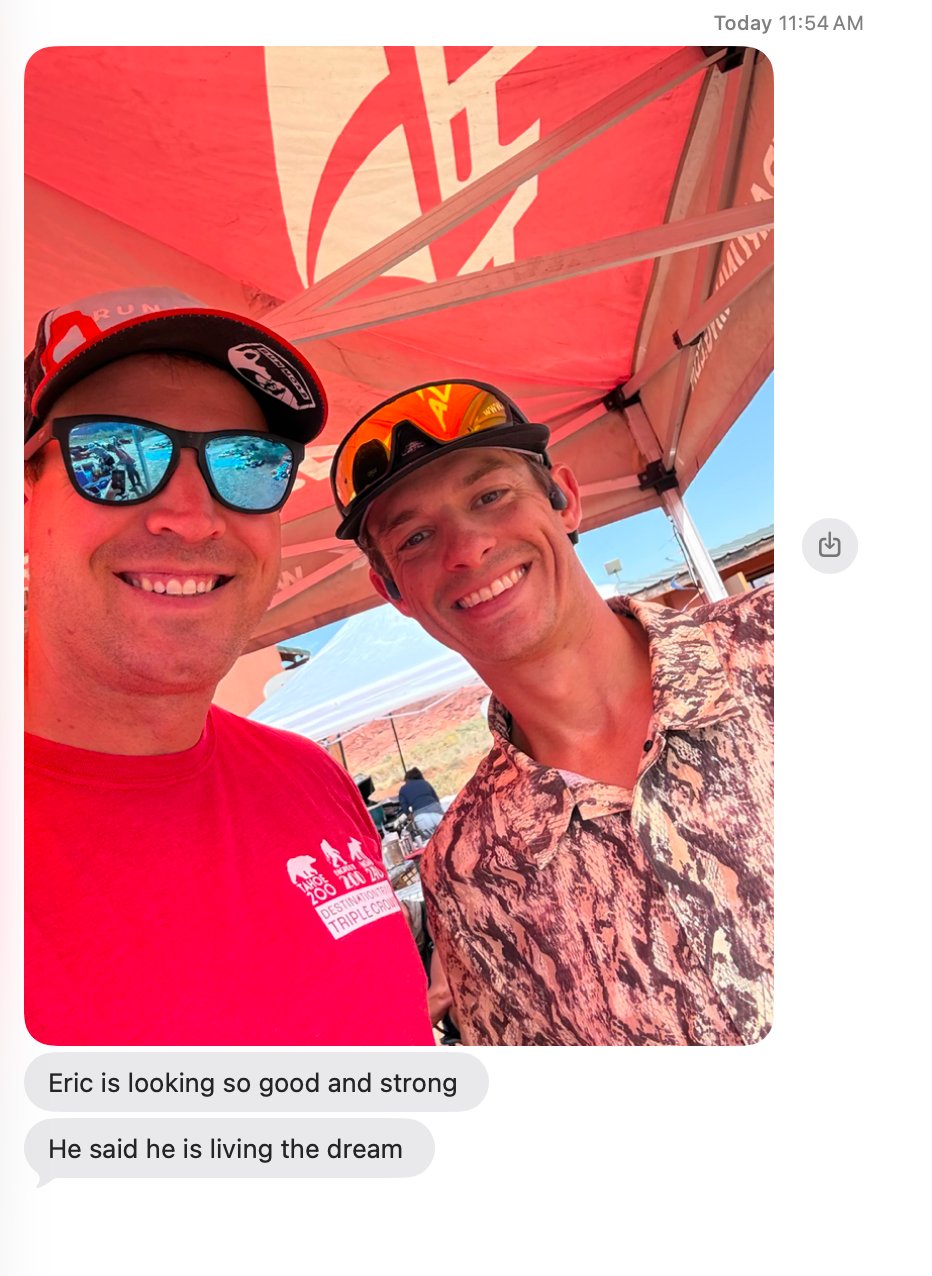
    We got the sweetest update from a friend working the Base Camp aid station: Eric is looking strong, feeling good, and apparently “living the dream.” 💛

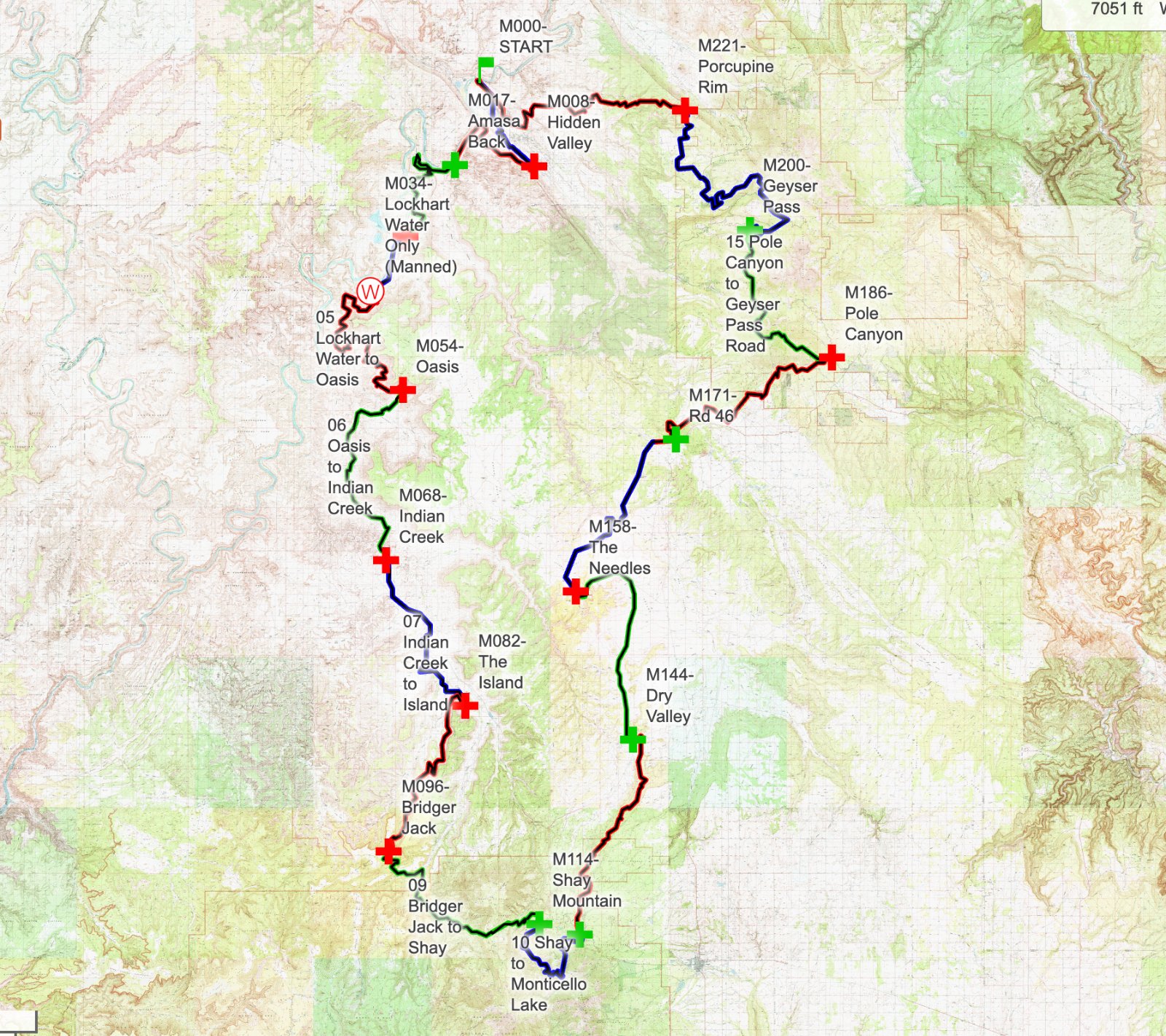
    A little perspective on what an “aid station” means in a 240-mile race: there are 16 aid stations throughout the Moab 240—but they are not all full stops. There are 11 full aid stations, 4 sleep stations, and 1 water-only station.

    On average, Eric has to cover about 14.2 miles between stations. The longest stretch is 20.9 miles—and that comes much later in the race, between Geyser Pass and Porcupine Rim.

    So this smiling photo at Base Camp is such a good sign. He still has a very, very long way to go, but today is his "warm-up day" and he is off to a strong start.

  9. Near miss...

    Mile 23.5 of 240

    4h 49m elapsed

    The only aid station where crew was allowed to meet Eric today was Amasa Back—and Anthony missed him by just 3 minutes.

    We had been told the aid station was shuttle-access only, so Anthony waited for the shuttle. Then he realized Eric was only about 3 miles away. He decided to drive over himself, even though we had been told not to…and made it there just after Eric had left. At these stations, runners have to sign out when they depart, so we know he missed him by only three minutes.

    Anthony felt awful, but honestly, it put him in exactly the mindset needed for the rest of this race: locked in, watching the tracker closely, and determined not to miss Eric again.

    This morning, as Eric put on all of his required gear, it really hit him:

    I should have trained with all of this on.

    Water is heavy—he has to carry at least 3 liters with him at all times out there, on top of his food/gels, safety gear, poles, and everything else needed to get through the desert and mountains.

    Three minutes apart today—but Eric is moving forward, and the crew is ready for the next chance to see him.

  10. He’s officially out there.

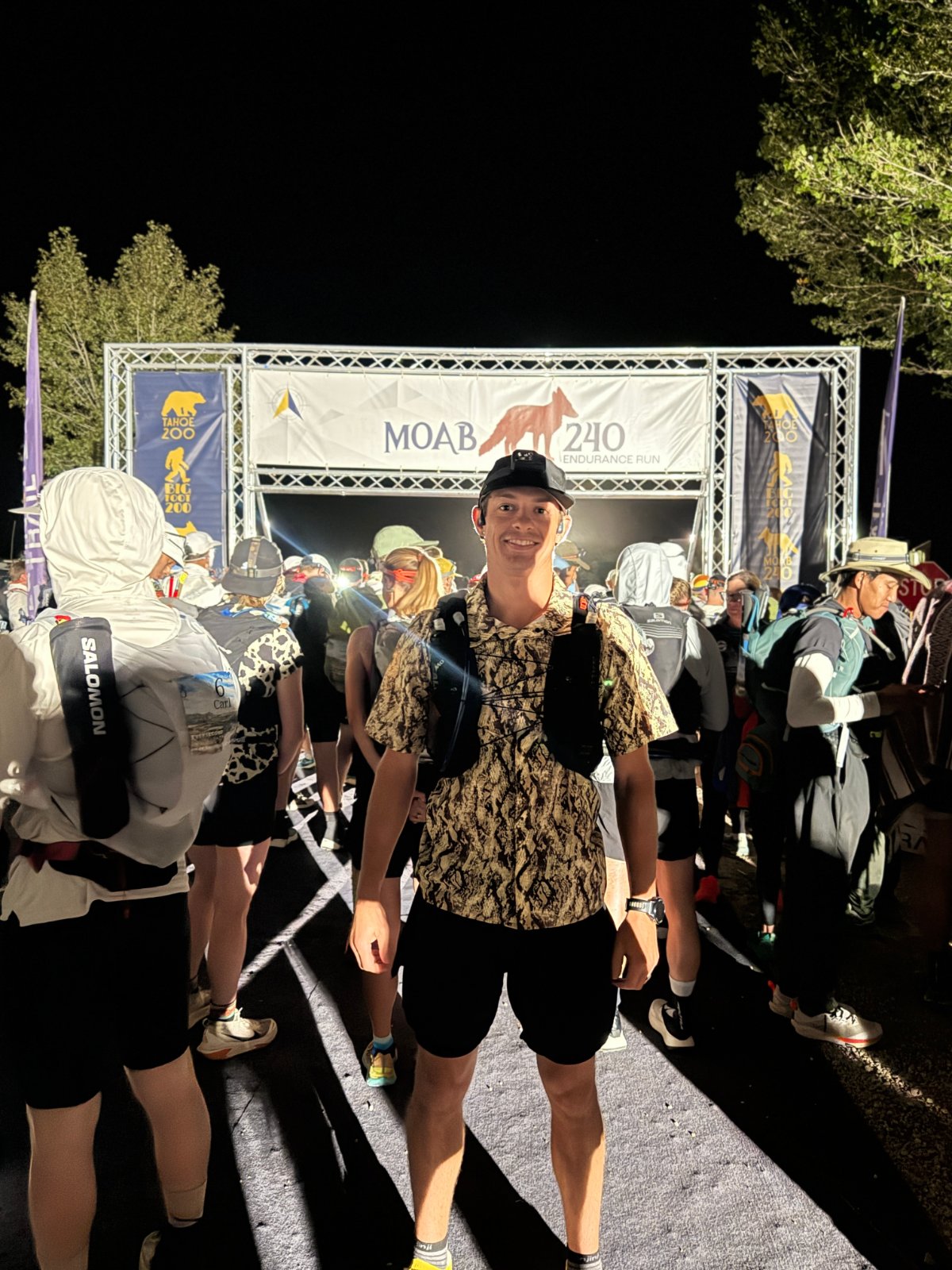
    At 6:00 AM this morning, Eric started the Moab 240 — a 240-mile race through the desert and mountains of Utah.

    Today, he is mentally treating it as his “warm-up day.” The goal is to stay patient, keep the effort easy, eat and drink consistently, and save his energy for the much harder miles still ahead.

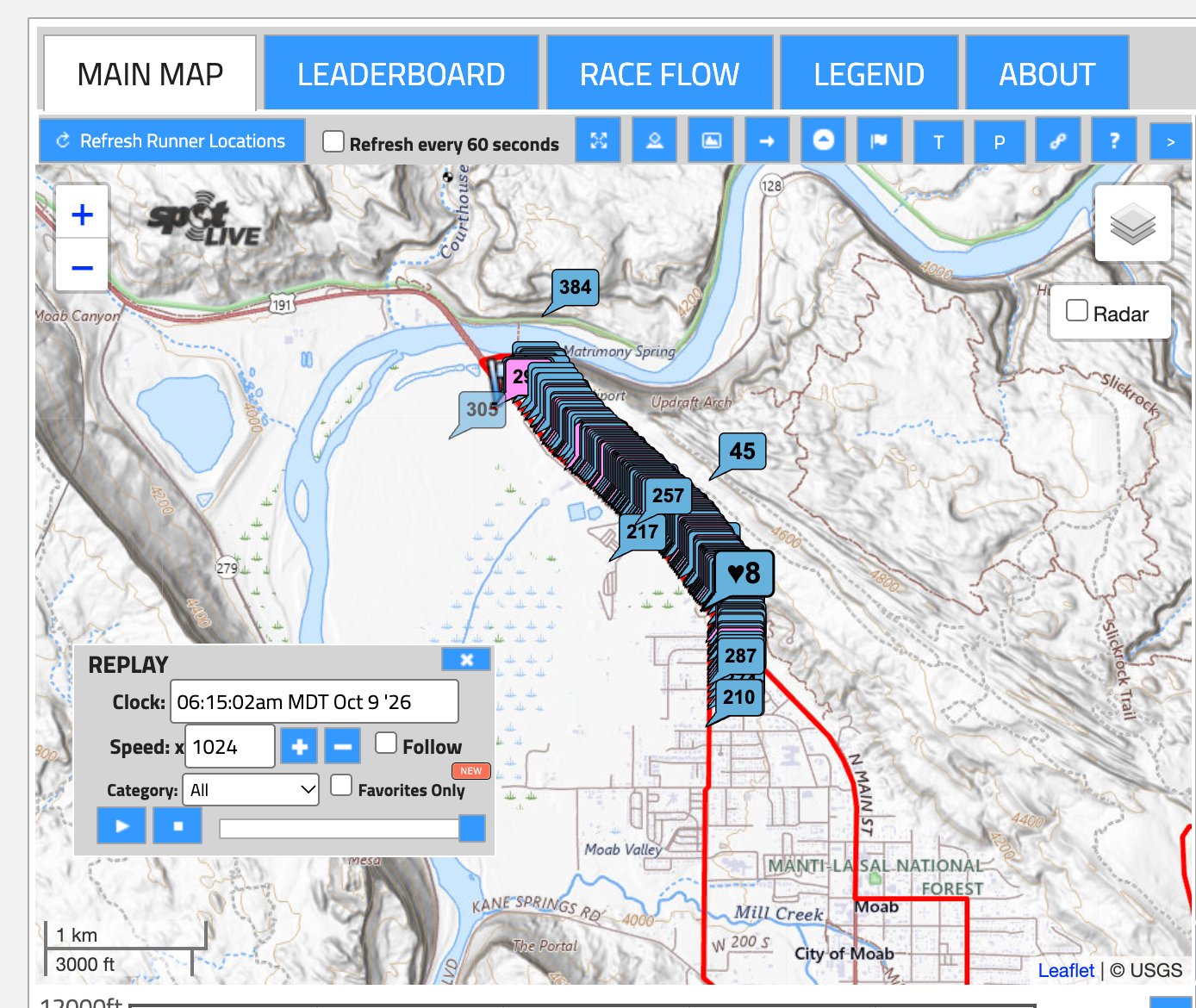
    You can follow Eric’s progress at any point on the live tracker link below.

    At a typical race, runners wear a small timing chip on their bib or shoe. The chip records time only when runners run over timing mats at checkpoints.

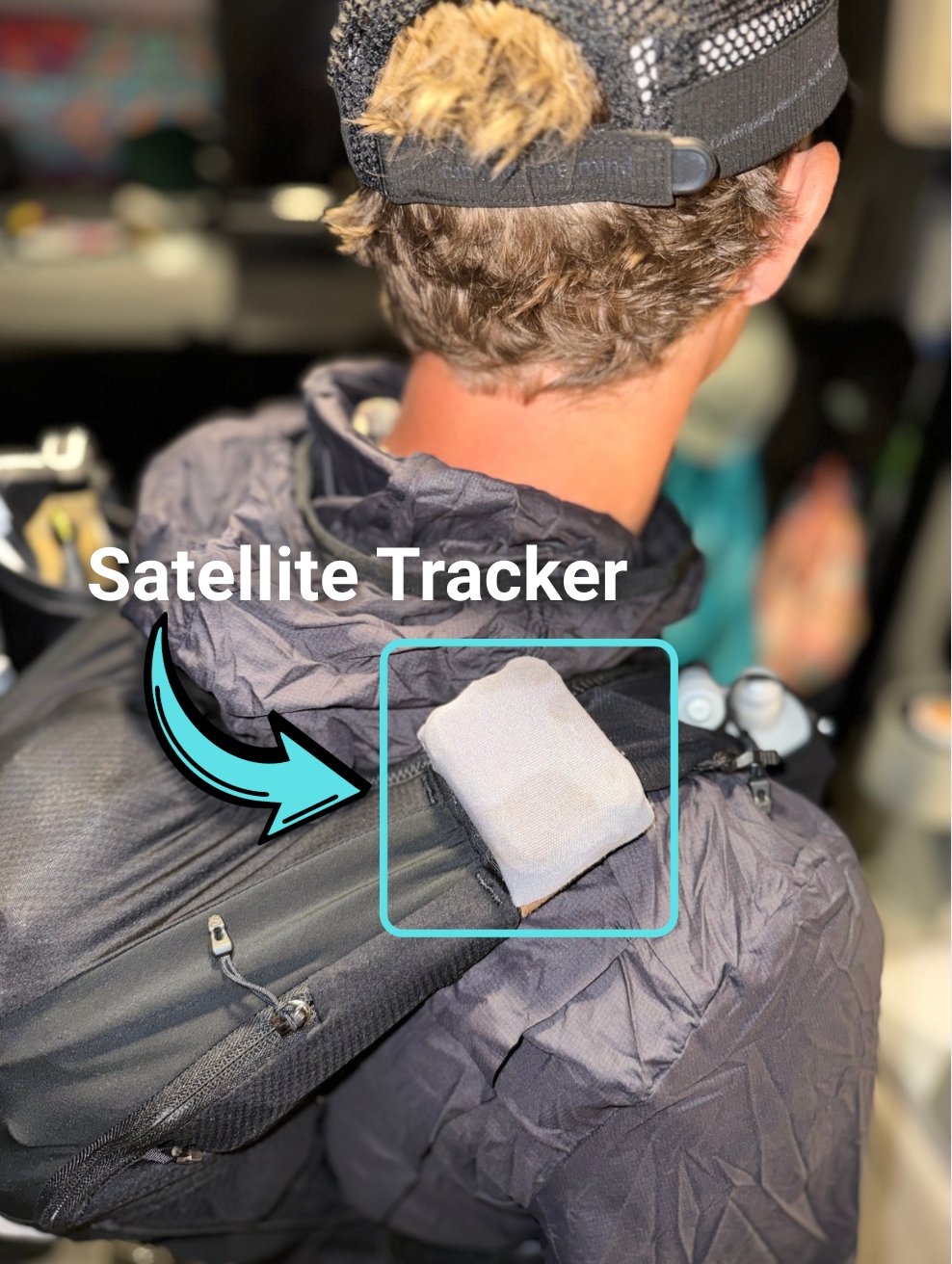
    For this race, that wouldn't be possible. Eric will be far from roads, power, and cell service for long stretches, so every runner wears a satellite tracker high on their shoulder with a clear view of the sky. It sends their location to satellites overhead, allowing race officials and crew to know where each runner is at all times. An important safety piece in such remote terrain. It also lets us follow Eric’s dot as he makes his way through the desert and mountains.

    We expect to share more frequent updates on Eric's progress and physical and mental state over the next couple of days, so keep following along with us!

  11. WHAT ARE “DROP BAGS”?

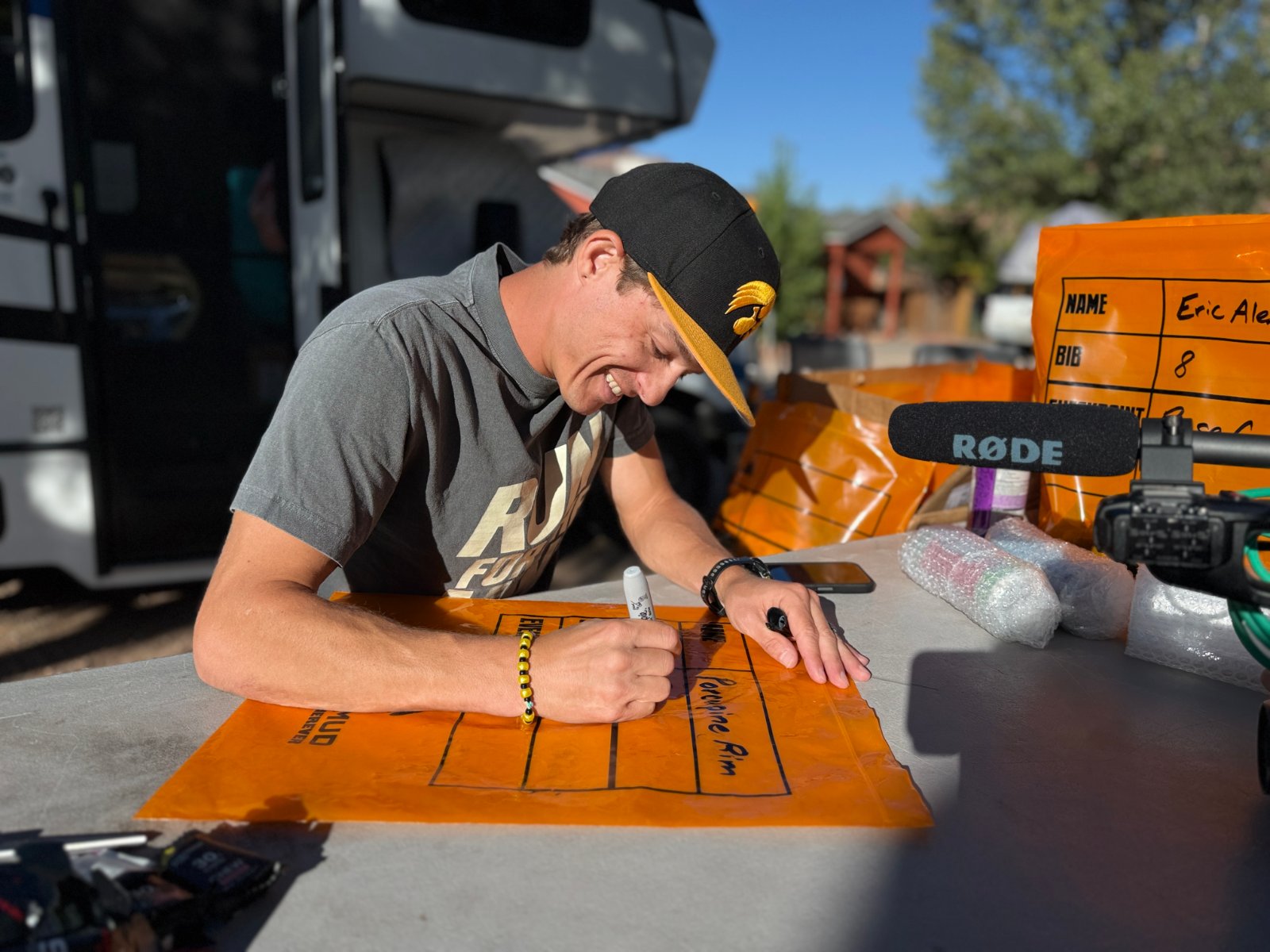
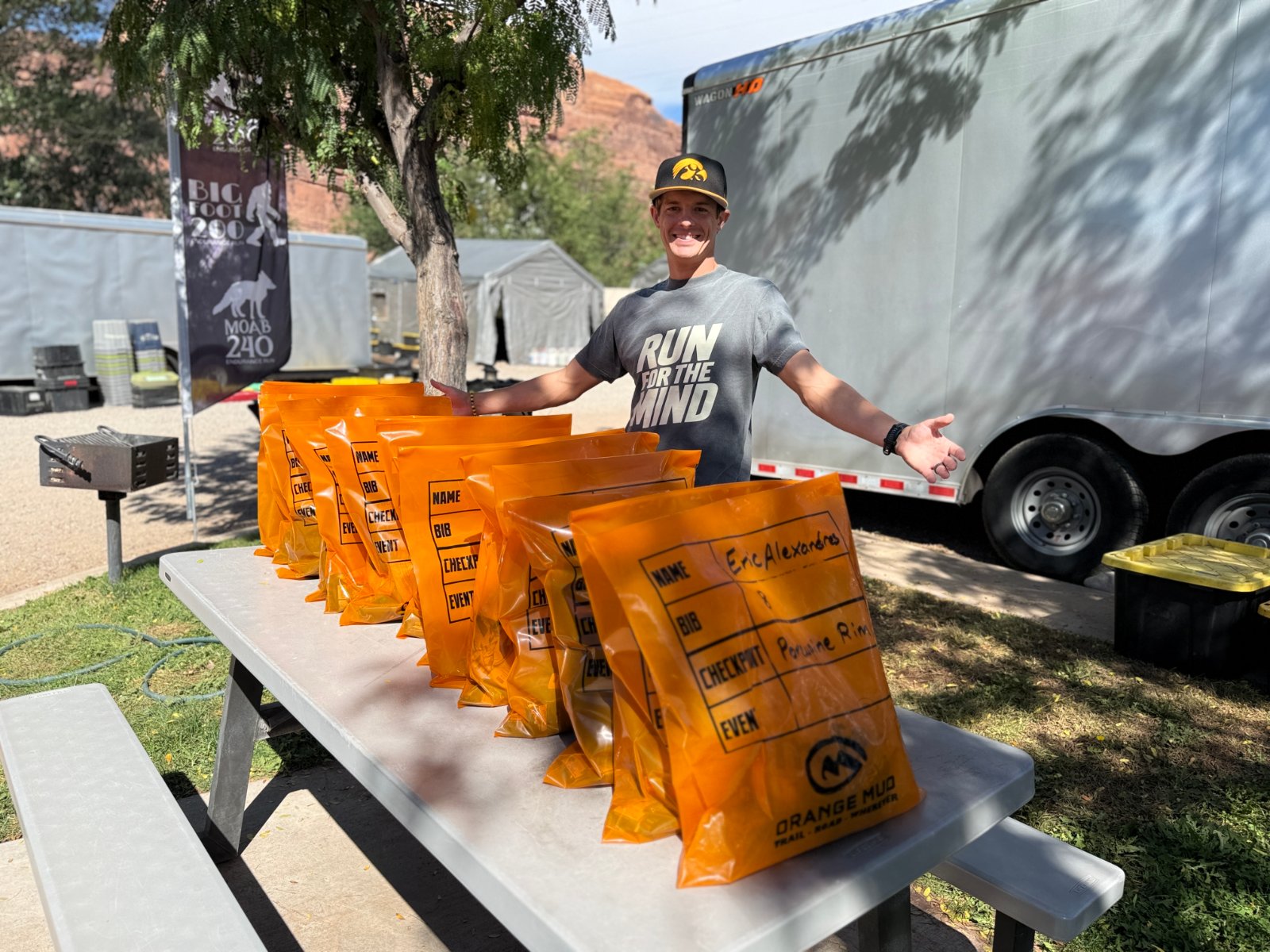
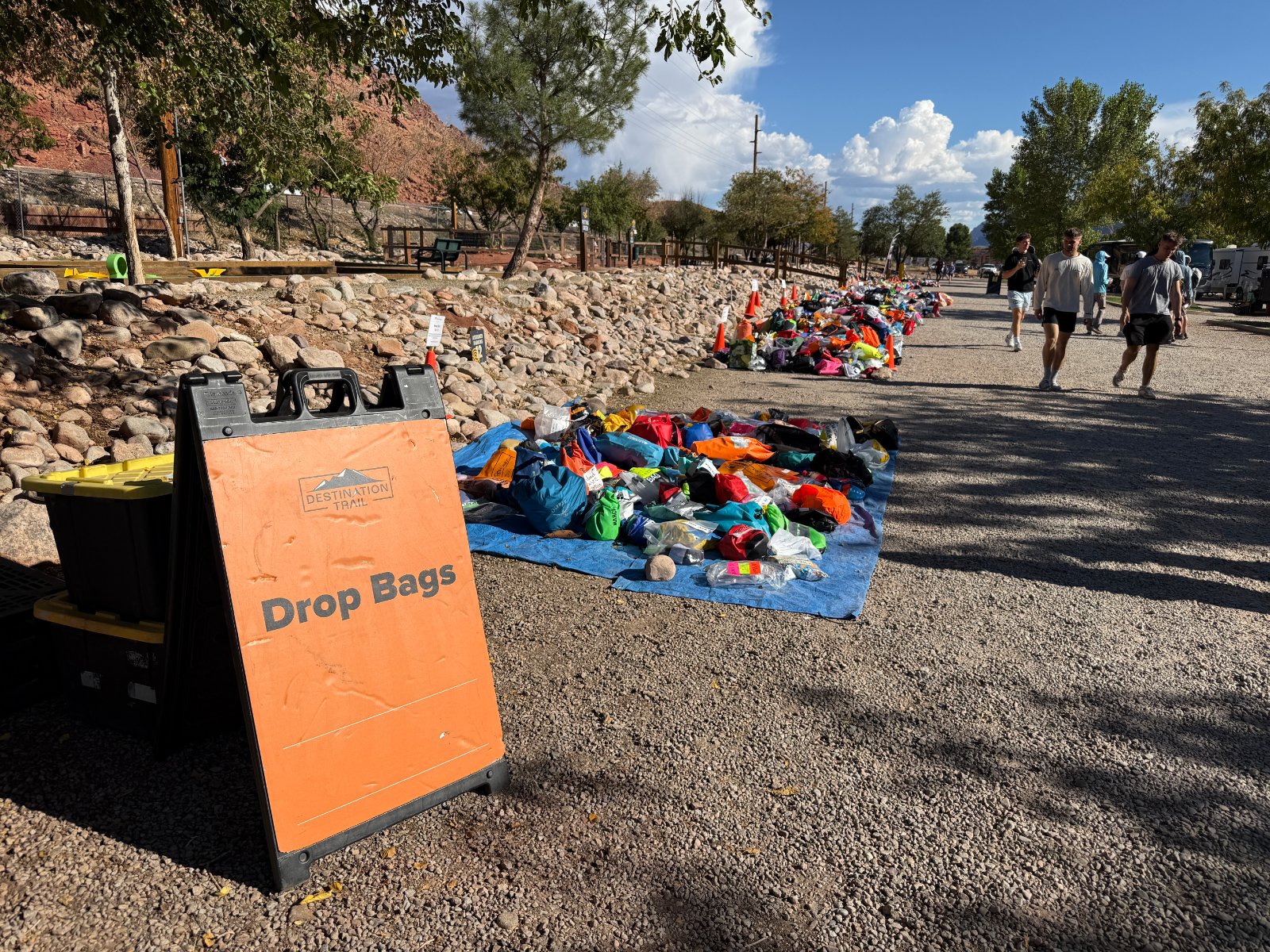
    Before Eric even starts tomorrow, 14 separate bags will already be waiting for him hundreds of miles down the course.

    They’re called drop bags—basically little personal resupply stations he packed in advance.

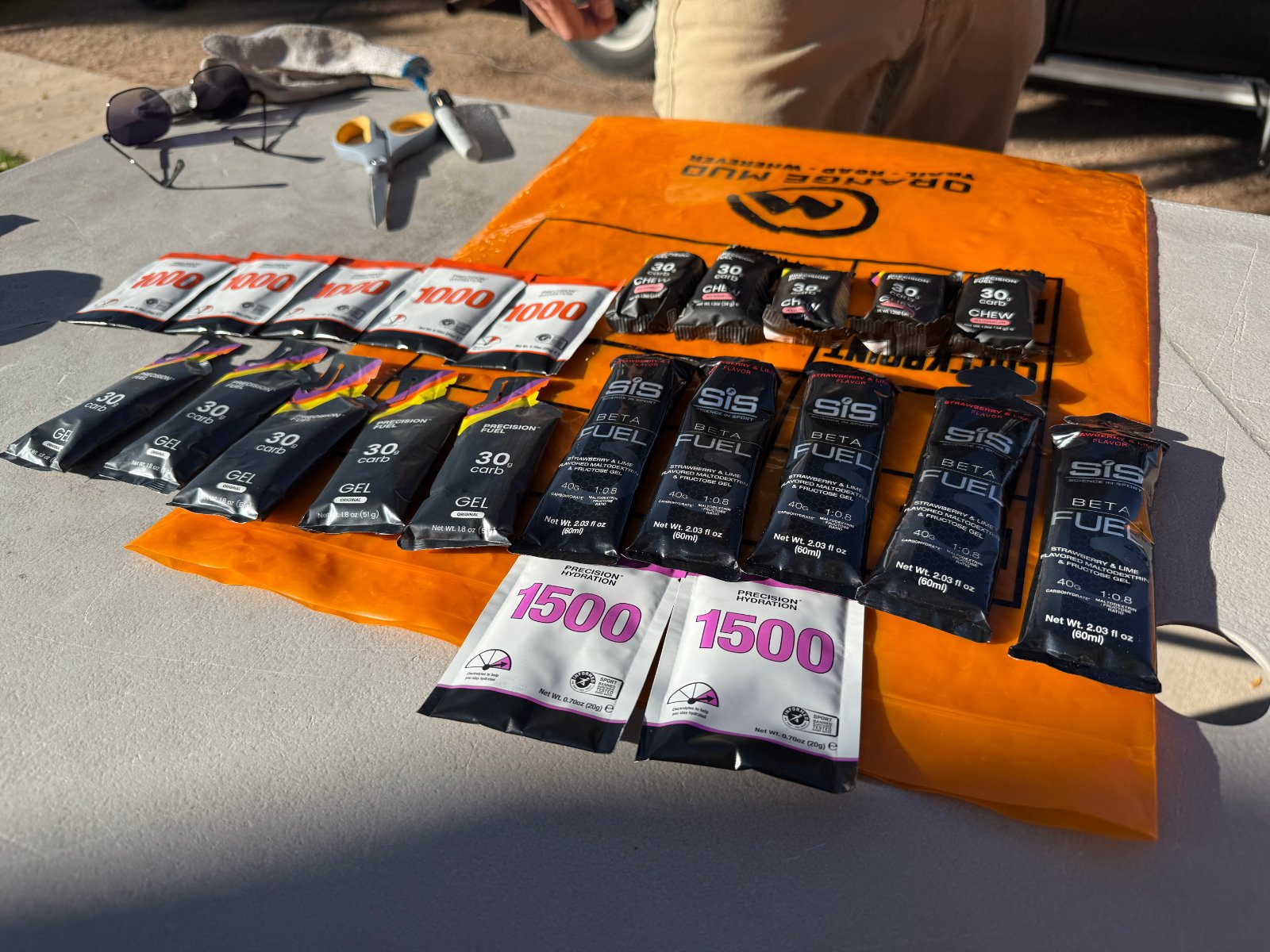
    Aid stations provide basic things for every runner, like water and some food. But Eric’s drop bags have the specific things he knows he’ll need: his preferred fuel, electrolyte mix, fresh socks, batteries, layers, and backup gear.

    The photo is only part of his fuel. The little gel packs are concentrated, easy-to-swallow energy—fast calories in a pouch—so he can keep eating while running or hiking instead of stopping for a full meal. Eric has to take in fuel every 30 minutes for days, and the gel packs alone for this one race cost more than $900.

    When he gets to a stop, he finds his bag, repacks for the next section, and heads back out.

    He starts tomorrow at 6:00 AM Mountain Time. We’re so excited to have you along for this journey, and we’ll share updates here as they come in throughout the race.

  12. WHAT ERIC’S MOAB 240 PLAN ACTUALLY LOOKS LIKE

    A few behind-the-scenes things that make this feel even crazier:

    • He starts Friday at 6:00 AM and is not planning to sleep the first night. His first planned sleep is not until Saturday afternoon/evening—more than 24 hours into the race.
    • His goal finish is Monday at 6:00 AM: 72 hours after starting. His backup plan is Monday afternoon, with a contingency plan that reaches into Tuesday morning.
    • He has to eat or drink calories every 30 minutes, around the clock, even while moving through the night.
    • The race is not just Eric running alone. A pacer is someone allowed to run or hike alongside him for certain sections—helping keep him moving, alert, on course, and mentally in it when exhaustion really starts to hit.
    • His crew will meet him only at certain approved locations to refill water, restock food, swap batteries and layers, check his feet, and make sure he is alert enough to safely continue.
    • Some legs require more water than he can physically carry at once, so the plan includes backup refill options and a lot of problem-solving on the fly.

    That is the part most people won’t see when they watch the tracker: this is a multi-day effort with a whole team helping him keep moving forward.

    For anyone who wants to nerd out on the full plan, Eric’s crew/pacer binder is below.

  13. 10 wild facts about the Moab 240 (4 days to go!)

    Mile 0 of 240

    Eric starts this Friday, October 9 at 6:00 AM. Before he heads out into the desert, here's what he's actually signed up for:

    1. It's not actually 240 miles. This year it's 243.5. Construction on Highway 128 forced a reroute that added 1.7 miles to the last stretch.
    2. He'll climb nearly 32,000 feet. That's more than climbing Mount Everest from sea level (29,032 ft).
    3. The clock never stops. Runners get 113 hours (4 days, 17 hours) to finish, and every minute of sleep counts against it.
    4. Hallucinations are normal. The race manual warns runners to expect them, along with serious sleep deprivation.
    5. There's one 24.4-mile stretch with no full aid station. Between Basecamp and the Oasis, the only stop is a water station with a 1-liter limit, so Eric has to leave carrying at least 3 liters.
    6. Temperatures on the course have ranged from 7°F to 95°F: desert heat by day, freezing mountain nights. And there's rain in the forecast.
    7. He'll climb above 10,500 feet in the Abajo Mountains, and the hardest section stays above 9,000 feet for 14 miles.
    8. The trail is marked with "dragons": reflective clothespins with ribbon. In the open desert there can be miles between them.
    9. What goes out comes back. Runners carry wag bags, and leaving any waste on the trail gets you disqualified on the spot.
    10. Every finisher gets a one-of-a-kind, artist-made belt buckle.

    The race was created in 2017 in memory of ultrarunner Stephen Jones, who first dreamed of a single-loop 200-miler starting and ending in Moab. The race calls itself "a run, not a race": the accomplishment is finishing the journey.

    Follow along here all week, and once the race starts we'll share Eric's mile and time on course with every update.

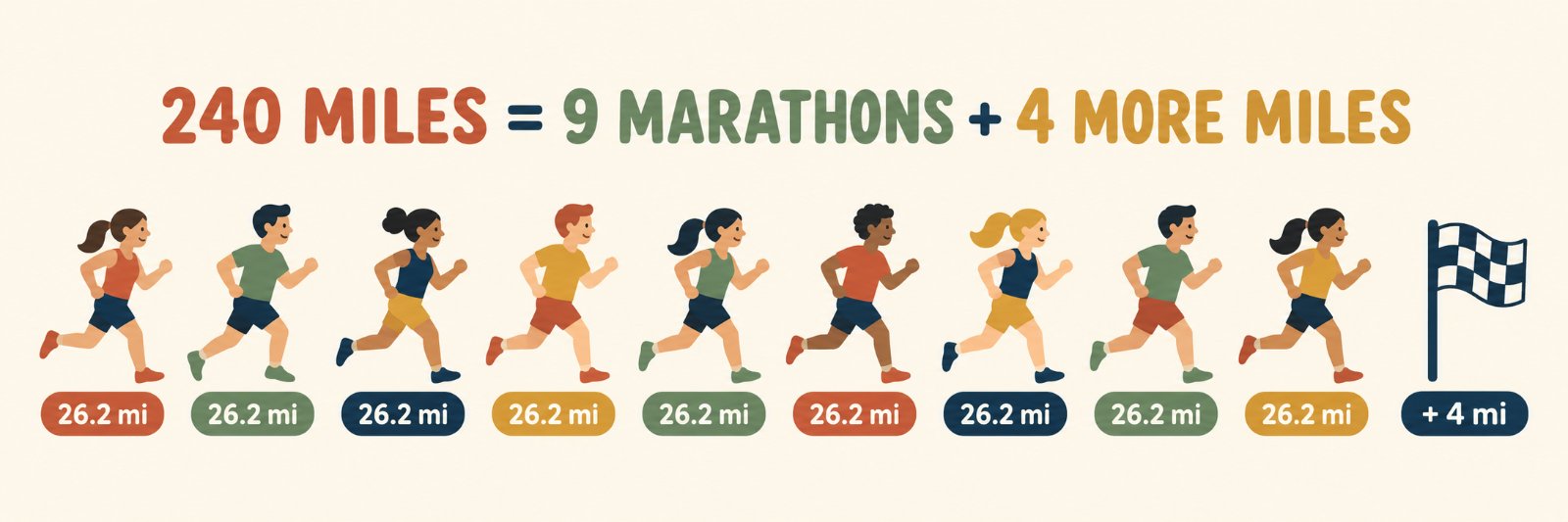
  14. 240 miles is hard to wrap your mind around.

    It’s the equivalent of running nine full marathons… and then another four miles.

    Eric will be moving through the desert, overnight, and into the next day—one step at a time. The Moab 240 is not just a long run; it’s an absolutely wild test of endurance, grit, and heart.

    We’ll share updates along the way so you can follow his journey and cheer him on from wherever you are.